
Every emotion is okay—what matters is how we respond.
At SAAAC, we believe that learning to recognize and manage our emotions is just as important as learning to read or write. Emotional regulation—the ability to adjust how we feel and act—is a skill that supports children (and adults!) in school, at home, and in everyday life. And like any skill, it can be taught and practiced—with love, patience, and the right tools.
This is where the Zones of Regulation come in—a simple, child-friendly way to explore emotions, body signals, and coping strategies. Whether you’re a parent, caregiver, or educator, this guide can help you better understand how to support a child through the ups and downs of their day.
What is Regulation?
To regulate something means to adjust or control it so it works better. Just like we regulate the heat in a room, we can also regulate how we feel—our energy levels, our emotions, our reactions.
Emotional regulation helps us stay calm during challenges, feel energized when we need to focus, and enjoy everyday moments. It’s not about being happy all the time—it’s about learning how to respond to our emotions in ways that support our goals and well-being.
Self-Regulation vs. Co-Regulation
There are two key ways we manage emotions:
| Self Regulation | Co-Regulation |
| This is when we use strategies—like deep breathing, movement, music, or mindfulness—to help ourselves feel more in control. Children can build these skills over time, especially when supported by adults. | Sometimes, we need help. Co-regulation is when someone else helps us manage our feelings—by offering comfort, talking things through, or just being present. This is especially important for younger children, and it’s a powerful reminder: kids don’t have to do it all alone. |
The Zones of Regulation: Four Colours, Many Feelings
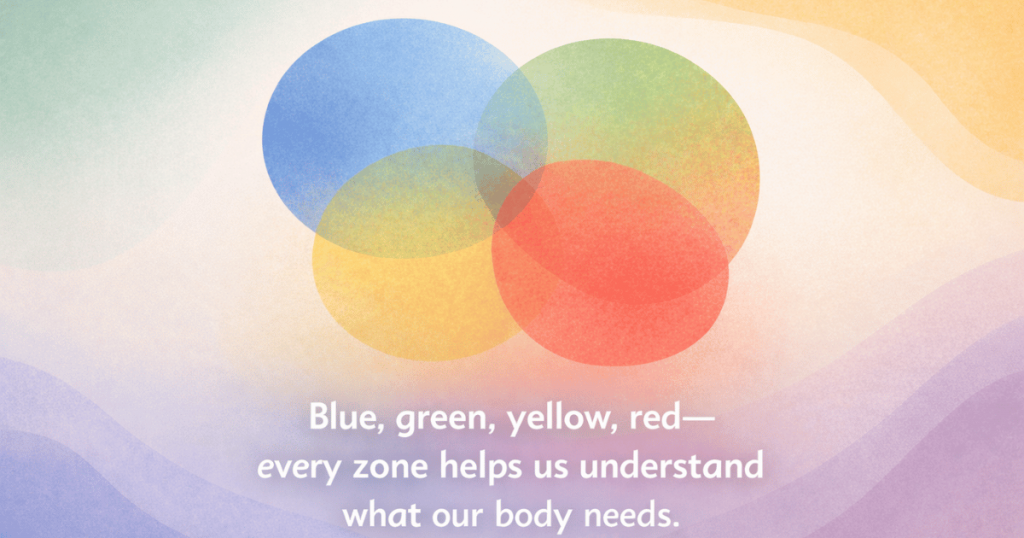
The Zones of Regulation, developed by Leah Kuypers, is a simple way to understand our feelings by sorting them into four colour-coded zones:
🟦 Blue Zone
Low energy: tired, sad, bored, sick
Body signals: slow movement, low energy, foggy thinking
🟩 Green Zone
Calm and focused: happy, ready to learn
Body signals: steady breathing, relaxed muscles, comfortable energy
🟨 Yellow Zone
Heightened alertness: silly, excited, nervous, frustrated
Body signals: fast heartbeat, tense muscles, fidgeting, sweating
🟥 Red Zone
Intense emotions: anger, panic, overwhelm
Body signals: loud voice, flushed face, racing thoughts
None of these zones are “bad”—we all move through different zones every day. The key is noticing where we are and learning how to respond.
Zones Check-Ins: Building Awareness
A zones check-in helps us pause and ask:
- What is my body doing? (Is my heart racing? Are my muscles tense?)
- What am I feeling? (Am I anxious, excited, tired?)
- What zone am I in?
- What do I need right now?
You can model this out loud with your child:
“My heart is beating fast—I think I’m in the yellow zone. I’m going to take a few deep breaths.”
Doing this together teaches children that emotions are normal, and managing them is something we can learn and do.
Building a Toolbox for Each Zone
Different emotions need different tools. That’s why many families and educators build “toolboxes”—sets of activities or supports that help regulate depending on the zone.
Here are some examples:
| Zone | Tools That Might Help |
| 🔵 Blue | Energetic music, crunchy snacks, movement breaks, cuddles, rest |
| 🟢 Green | Staying hydrated, stretching, quiet focus time, affirmations |
| 🟡 Yellow | Fidget tools, sensory toys, deep breathing, talking it out |
| 🔴 Red | Taking a break, squeezing a stress ball, safe movement (e.g. jumping jacks), counting to 10 |
Tip: What works for one person may not work for another. Encourage your child to try different tools and discover what helps them feel better.
The Zones Pathway: A 5-Step Strategy
When your child is feeling overwhelmed, here’s a 5-step process to help them work through it:
- Notice the Situation
What’s happening? Is it a trigger (unwelcome stressor) or a spark (positive excitement)? - Do a Check-In
What zone are we in? What are we feeling in our bodies? - Stop, Opt, Go
Stop: Pause before reacting
Opt: Think about your options
Go: Choose what will help you meet your goal - Pick a Tool
Choose a strategy from your toolbox that matches the zone. - Reflect
Did it work? If not, try something else. Reflecting helps us learn and grow.
Important Reminders for Caregivers
🧡 All Zones Are Okay
There’s no “bad” zone. Feeling angry or sad is just as valid as feeling calm or excited. What matters is having tools to navigate those feelings safely.
🧡 Every Child Is Unique
Different situations affect kids differently. What energizes one child might overwhelm another. That’s okay.
🧡 The Goal Isn’t Always Green
We don’t need to aim for “calm” all the time. Kids can still succeed and meet their goals in the yellow zone—or even the red—if they have the support they need.
🧡 Regulation is a Skill, Not a Requirement
We don’t use the Zones as a way to force compliance. We use it as a way to build awareness, understanding, and confidence.
How SAAAC Supports Emotional Regulation
At SAAAC, we use the Zones of Regulation in our My Emotions group program. This digital curriculum, paired with workshops for parents, gives families a shared language and toolkit to support emotional regulation at home, at school, and beyond.
Together, we teach:
- What emotions feel like in our bodies
- How to recognize triggers and sparks
- How to build personalized toolboxes
- How to regulate in ways that feel safe, empowering, and culturally relevant
If you’re interested in joining a future session of My Emotions, reach out to jenilee@saaac.org or visit our ABA group page periodically for updates.
You’re Not Alone
Emotional regulation is a journey—for kids and for the adults who love them. At SAAAC, we’re here to walk that journey with you.
Every meltdown, every breakthrough, every deep breath is a step toward helping your child feel seen, safe, and supported.