By Geetha Moorthy
For many years, I believed in awareness.
Like many people, I thought that if more people simply knew about autism — understood what it was, recognized the signs, and became more informed — that would be enough to create change.
And to some extent, awareness matters. It opens the door.
But over time, through years of teaching, creating, and spending time alongside autistic and neurodivergent individuals, I began to realize that awareness is only the beginning.
It is not the destination.
What truly changes lives is acceptance.
What Acceptance Has Taught Me
Acceptance is not just about understanding differences.
It is about recognizing value.
It is about seeing autistic individuals not as people who need to be “fixed” or “supported,” but as individuals who bring creativity, perspective, and contribution into our world — in ways that are deeply meaningful.
I’ve had the privilege of witnessing this firsthand.
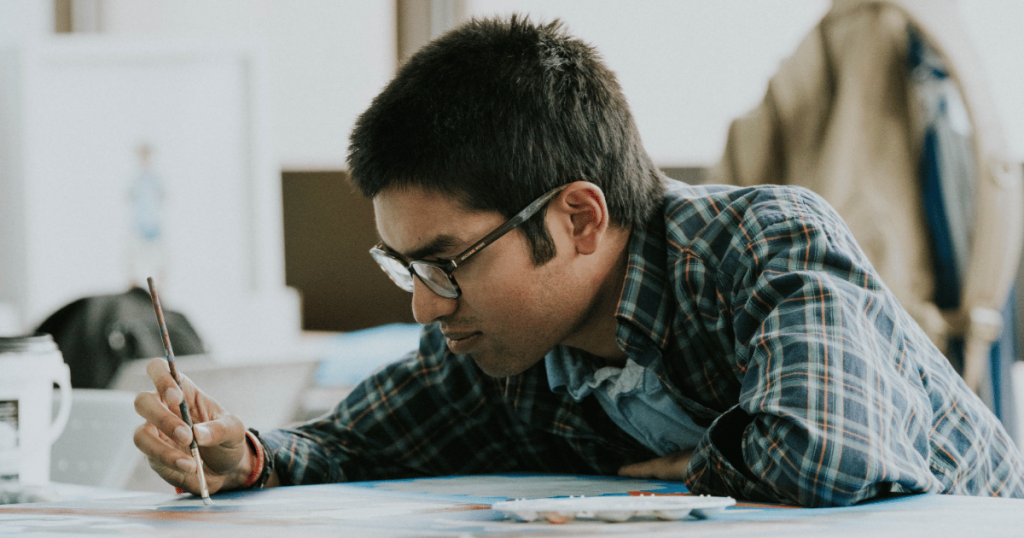
Through our arts programs, I’ve seen individuals express emotions, stories, and ideas that might not have been possible through words alone.
Through our work with families, I’ve seen resilience, growth, and connection in ways that are both powerful and humbling.
And over time, my perspective shifted — from asking “How do we support?” to also asking “How do we create real opportunities for people to share their ideas, develop their strengths, and participate in everyday life?
We Are Creators
At SAAAC, this belief has come to life in many ways.
Our musical and art exhibition, “Amma, Where Are You?”, was more than a performance. It was a platform where autistic individuals shared their voices, their creativity, and their experiences with the world. It reminded all of us that art is not just something we teach — it is something that already exists within each individual.
Our upcoming publication, The Art of Us, continues this work by creating a lasting space for autistic artists to be seen, heard, and celebrated.
And through SPARKS, we’ve seen individuals take their ideas and turn them into businesses — building confidence, independence, and new possibilities for their futures.
These are not just programs.
They are examples of what becomes possible when acceptance moves from an idea into action.
What Acceptance Looks Like in Practice at SAAAC
Acceptance means:
- Creating platforms for expression
- Building pathways for opportunity
- Valuing both strengths and support needs
It means recognizing that contribution can look different — and that difference does not diminish value.
When we embrace this, we move beyond inclusion as a concept, and begin to build communities where people truly belong.
Looking Ahead
As we mark Autism Acceptance Day, I invite all of us — as individuals, as professionals, and as a community — to reflect on what acceptance means in our own lives.
How do we move beyond understanding, and into action?
How do we create spaces where people are not just included, but empowered?
At SAAAC, we will continue to build these spaces — through art, through entrepreneurship, and through the everyday work we do alongside the families and individuals we serve.
Because acceptance is not a moment.
It is a commitment.